Crossbench
ApprovedConcludedLegislation
Title

MPs reject the second assisted dying bill at second reading

Date
11 September 2026 (Commons second reading)
Relevant topic(s)
ParliamentThe legislative processParliamentThe structure and role of the House of Commons and House of LordsParliamentThe ways in which Parliament interacts with the executiveDemocracy and participationPressure groups

What happened?

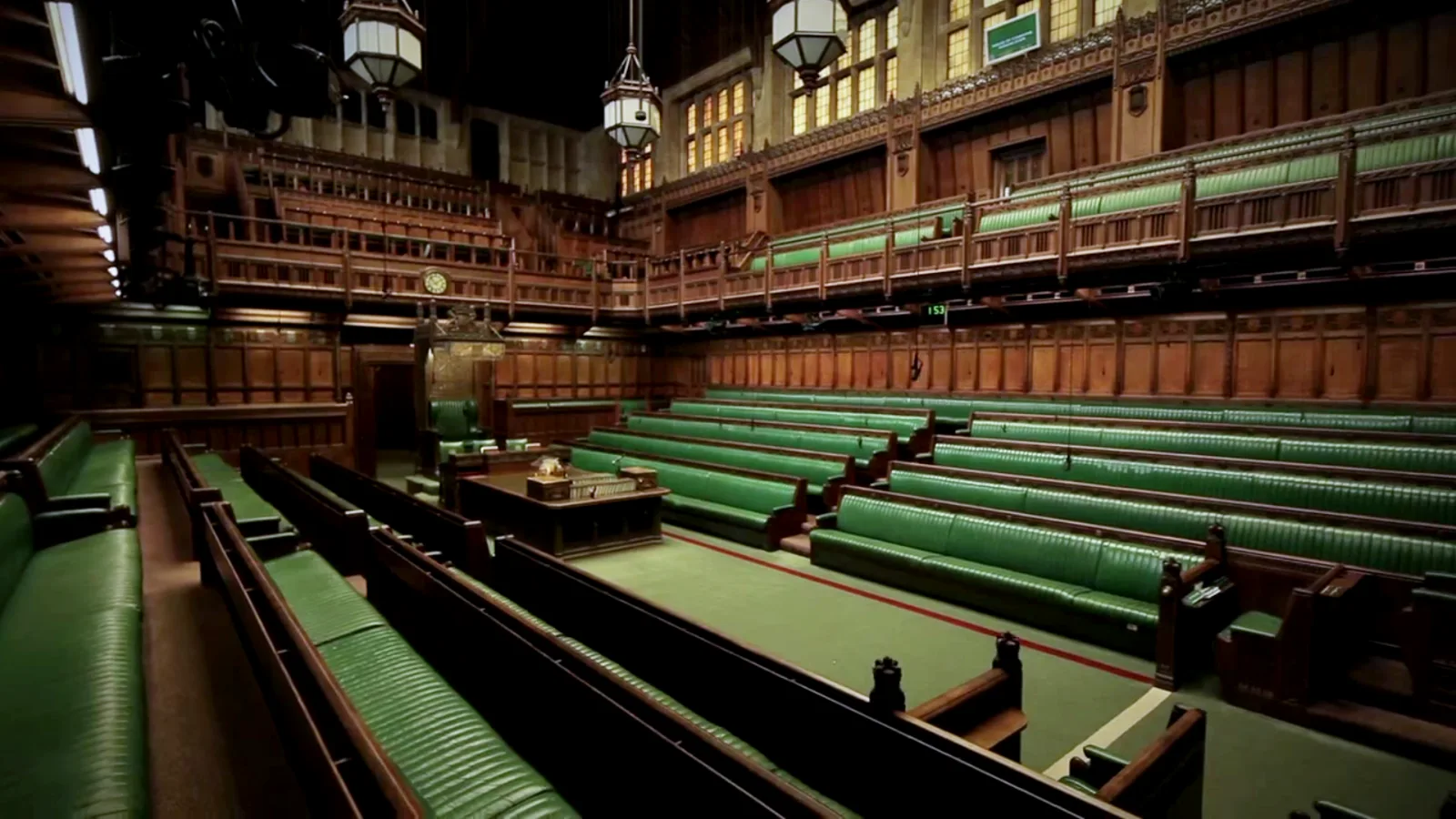
House of Commons chamber
Photo: Original photo by UK Parliament, CC BY 3.0

After Kim Leadbeater’s assisted dying bill ran out of time in the House of Lords, the Labour MP Lauren Edwards introduced a near-identical Terminally Ill Adults (End of Life) Bill as a private member’s bill in June 2026. It would have allowed some terminally ill adults in England and Wales who were expected to die within six months to seek assistance to end their lives. The government stayed neutral and MPs had a free vote.

On 11 September 2026, after a debate of more than four hours, MPs voted against the bill at second reading by 286 votes to 270. The Commons had supported the earlier bill in 2025, so the result reversed its previous position, and the bill could go no further.

  • The bill was a private member’s bill, chosen in the ballot, sponsored by Lauren Edwards, Labour MP for Rochester and Strood, in the 2026–27 session.
  • Lauren Edwards introduced the bill in the House of Commons on 17 June 2026. It would have allowed terminally ill adults reasonably expected to die within six months to request assistance to end their own lives.
  • Requests would have needed the approval of two doctors and an expert panel.
  • The bill was near-identical to Kim Leadbeater’s bill of the previous session, which passed the Commons in 2025 by 23 votes but ran out of time in the Lords in April 2026.
  • MPs rejected the bill at second reading on 11 September 2026 by 286 votes to 270, a majority of 16.
  • The government said it was neutral on assisted dying in principle and on how the law might change, but that it had a duty to make sure any legislation was workable, effective and enforceable.
  • The Prime Minister, Andy Burnham, did not vote, saying he did not want to “unduly influence the debate”.
  • The Parliament Acts could not be used to pass the bill without the Lords’ consent. Another MP could bring forward a similar bill, but it would have to start from the beginning.
  • Dignity in Dying, which supported the bill, called the result a setback and said the issue was not going away. Care Not Killing, which opposed it, welcomed the result and called for the focus to move to palliative care.
  • Archbishop Richard Moth, leader of Catholics in England and Wales, and the Archbishop of Canterbury, Dame Sarah Mullally, opposed the bill. The Royal College of Psychiatrists raised concerns about safeguards for people with mental illness.
  • Hospice UK and Marie Curie were reported as neutral on assisted dying in principle, while warning that end-of-life care was patchy and underfunded.
Two assisted dying bills
  1. October 2024Kim Leadbeater introduces the first bill.
  2. 2025The bill passes the Commons by 23 votes.
  3. April 2026The bill runs out of time in the Lords.
  4. 17 June 2026Lauren Edwards introduces a near-identical bill.
  5. 11 September 2026MPs reject it at second reading by 286 votes to 270.

Why is it politically significant?

The bill shows the limits of the private member’s bill route. Without government time or the Parliament Acts, a bill that the Commons had backed had to start again in a new session, and at second reading it lost. A backbench MP can bring a major issue to a vote, but cannot guarantee the outcome.

It also shows how a free vote works. With no whip and a neutral government, the result depended on individual MPs’ judgements, and pressure groups, churches and professional bodies on both sides tried to influence them directly.

How to use

Which arguments does it support?

Backbench MPs can set the parliamentary agenda on major social issues

Reasoning
Private members’ bills let MPs bring forward issues that governments choose not to take on.
Evidence
A ballot bill on assisted dying, sponsored by a backbench MP, was debated and voted on at second reading, on a free vote with the government neutral.
How it supports the argument
A backbencher rather than the government decided that Parliament would vote on assisted dying again.

Free votes allow MPs to act as trustees rather than delegates of their party

Reasoning
Without a whip, MPs vote according to their own judgement and conscience.
Evidence
The government was neutral and the Prime Minister did not vote; the Commons reached a different result from its vote on a near-identical bill in 2025.
How it supports the argument
The outcome reflected the individual choices of MPs rather than party discipline.

Pressure groups compete to influence Parliament

Reasoning
On issues of conscience, groups on both sides lobby individual MPs rather than the government.
Evidence
Dignity in Dying campaigned for the bill and Care Not Killing against it; churches and medical bodies also set out their views.
How it supports the argument
Organised groups on both sides tried to shape a vote that was not decided by party lines.

Which counterarguments exist?

Alternative view

The defeat shows the limits of backbench power

Supporters of the bill argue that the private member’s bill route left a major change dependent on limited time and the Lords. On this view, the defeat shows that backbenchers cannot deliver major reform without government support.

A different conclusion

Supporters said the vote was about process, not principle

Lauren Edwards argued that much of the opposition was about parliamentary process rather than the principle, and blamed a minority in the Lords for blocking the earlier bill. Opponents said the bill was unsafe and lacked adequate safeguards against coercion of vulnerable people.

Other explanations

Both sides argued from strongly held positions

Supporters argued for individual choice and an end to people travelling abroad, for example to Switzerland, for an assisted death. Opponents argued that palliative and social care should be fixed first and raised concerns about uncertain prognoses and the protection of disabled people and people with mental illness.

Limits of the evidence

Vote changes are hard to measure

The fall in support since 2025 may reflect MPs changing their minds, different MPs voting, or more abstentions. No reliable count of MPs who changed their vote was found.

Concepts and connections

Sources and verification

Event11 September 2026 (Commons second reading)
Added to bank8 November 2026
Last checked8 November 2026
Next check due8 May 2027
  1. 5
    Publisher UK ParliamentPublished 2026-09-14Type LegislationChecked not yet opened
    Source to check
  2. 3
    Publisher Department of Health and Social Care and Ministry of Justice (GOV.UK)Published 2026-10-26Type OfficialChecked not yet opened
    Source to check
  3. 4
    Publisher PA Media (Irish News)Published 2026-09-11Type NewsChecked not yet opened
    Source to check
  4. 2
    Publisher Associated Press (CP24)Published 2026-09-11Type NewsChecked not yet opened
    Source to check
  5. 1
    Publisher ITV NewsPublished 2026-09-11Type NewsChecked not yet opened
    Source to check
  6. 7
    Publisher Al JazeeraPublished 2026-09-11Type NewsChecked not yet opened
    Source to check
  7. 6
    Publisher Mills & ReevePublished 14 September 2026Type ProfessionalChecked 4 November 2026
    Limitation: A law firm’s summary; the same result was widely reported on 11 September 2026. Check Hansard for 11 September 2026.
    Opened

About this example

Is it still current?

Concluded

The bill can make no further progress. A future bill would have to start again from the beginning. Check for any new bill.

Why it is in the bank

Shows a private member’s bill and a free vote reversing the Commons’ earlier support for the same proposal.

  • ✓Relevance to the specification
  • PartlyStrength and reliability of the evidenceThe division figures come from news reports and a law firm’s summary; the official Hansard division record could not be opened and should be added.
  • ✓Importance to a wider political debate
  • ✓Usefulness in evaluative essays
  • ✓Connections to other topics
  • ✓Sufficiently current
  • ✓Adds something new to the bank

Editorial status

Approved

Signed off for students.

Origin: Human-written · Reviewer: Editor

Every fact on this page has been checked against original sources.