Crossbench
ApprovedDevelopingInternational
Title

European Council ties EU enlargement to reform of the Union itself

Date
15–16 October 2026 (European Council meeting)
Relevant topic(s)
Regionalism and the EUFactors that have fostered European integrationRegionalism and the EUSignificance of the EU as an international body and global actorRegionalism and the EUHow far regionalism addresses and resolves contemporary issues

What happened?

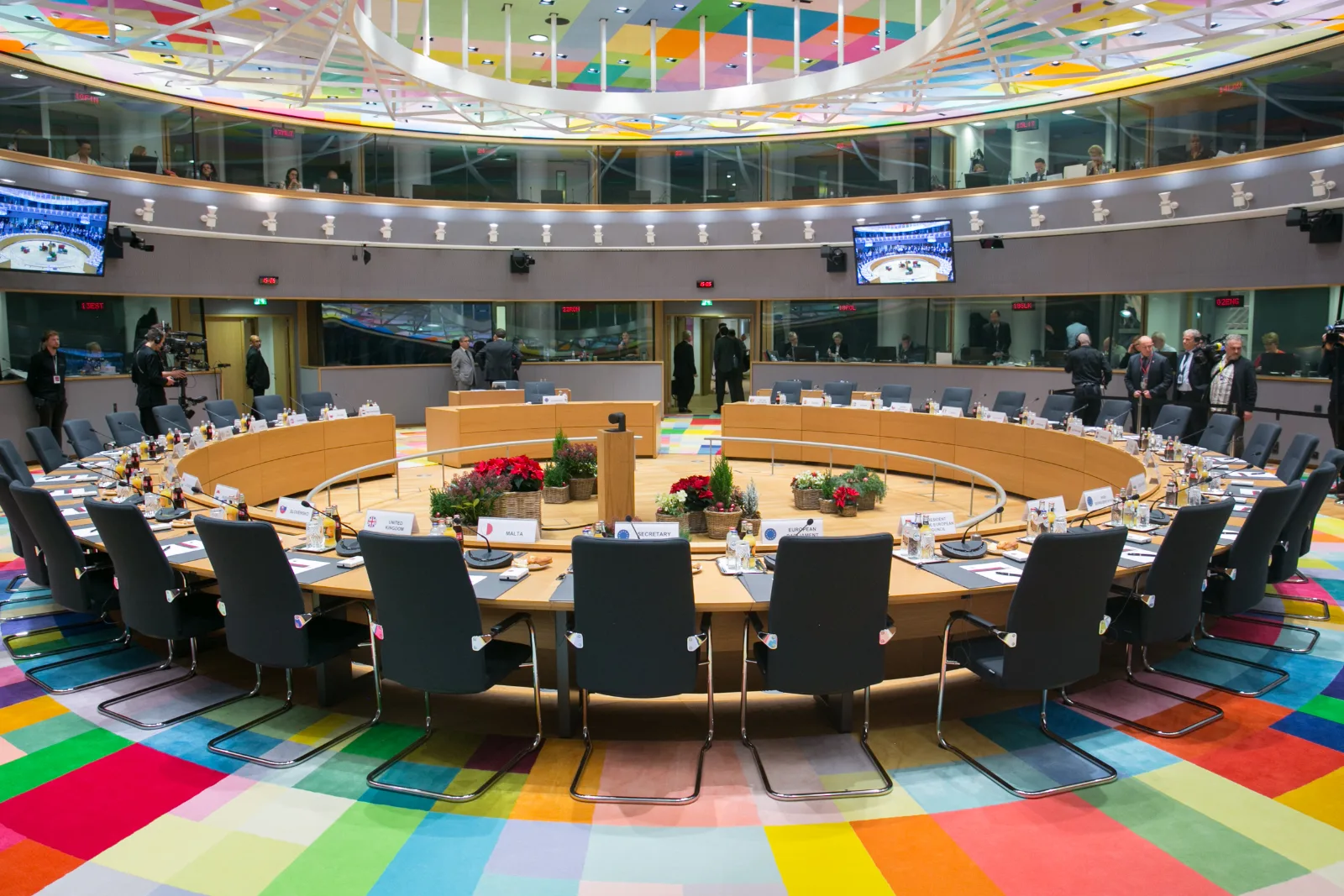
European Council
Photo: Original photo by EU2017EE Estonian Presidency, CC BY 2.0

The European Council, made up of the heads of state or government of the 27 member states, held a strategic discussion on enlargement and internal reform at its meeting in Brussels on 15 and 16 October 2026. Ten days earlier the European Commission had published a communication, “Preparing for a wider Union”, setting out how the EU’s decision-making, policies and budget might be adapted for more members, including greater use of qualified majority voting and new safeguards in future accession treaties.

In their conclusions, leaders called enlargement a geostrategic investment, said candidates must continue reforms, especially on the rule of law, and said the EU must also reform itself. They took note of the Commission’s communication rather than endorsing it, and welcomed work on drafting Montenegro’s accession treaty. On 4 November the Commission followed up with roadmaps for the four most advanced candidates: Montenegro, Albania, Moldova and Ukraine.
  • Under Article 49 of the Treaty on European Union, any European state that respects the EU’s founding values may apply to join. The Council must agree unanimously, the European Parliament must give its consent, and the accession treaty must be ratified by every member state.
  • At its meeting on 15 and 16 October 2026, the European Council, recalling the Granada Declaration, held a strategic discussion on the way forward on enlargement and internal reforms.
  • The conclusions describe enlargement as “a geostrategic investment in peace, security, stability and prosperity” and say that both future members and the EU need to be ready at the time of accession.
  • The conclusions say aspiring members should continue their reforms, notably on the rule of law, that the EU should advance its own internal reforms, and that each candidate advances in negotiations on the basis of its individual progress.
  • The European Council took note of the Commission’s communication “Preparing for a wider Union” and asked the Council to analyse all its strands and take the work forward.
  • The communication, published on 6 October 2026, proposed qualified majority voting for opening negotiating clusters and other intermediate accession decisions, wider use of qualified majority voting in areas such as sanctions, and a new safeguard in future accession treaties that could, in the most serious cases, suspend a new member’s Council voting rights for breaches of the EU’s founding values.
  • The Commission stated that the EU could admit more countries within its existing treaties and budget framework, and that the budget could accommodate new members while still funding existing priorities.
  • The European Council welcomed the ongoing work on drafting Montenegro’s accession treaty and noted the Irish Council Presidency’s aim to provisionally close the remaining negotiating chapters, subject to Montenegro carrying out the corresponding reforms.
  • A target in the draft conclusions for Montenegro to finish its negotiations by the end of 2026 was not in the final text. European Western Balkans reported that it was removed at Croatia’s request.
  • The conclusions welcomed the opening of negotiating clusters 2 and 3 for both Ukraine and Moldova at intergovernmental conferences on 13 October 2026.
  • On 4 November 2026 the Commission adopted its annual Enlargement Package, with indicative roadmaps for Montenegro, Albania, Moldova and Ukraine. It said Montenegro had provisionally closed 21 chapters and, subject to member states’ agreement, could close the rest by the end of 2026.
  • Euronews reported that moving an area from unanimity to qualified majority voting through the treaties’ “passerelle” clauses itself needs unanimous agreement, and that four EU diplomats speaking anonymously expected the internal reforms to fail.
  • Reuters reported that Viktor Orbán’s government in Hungary, which had often used its veto, was voted out in April 2026; Euronews reported that Ukraine’s formal progress in negotiations followed that change of government.
From the Commission’s proposals to the accession roadmaps
  1. 6 October 2026Commission publishes its communication “Preparing for a wider Union”.
  2. 13 October 2026Negotiating clusters 2 and 3 opened for Ukraine and for Moldova.
  3. 15–16 October 2026European Council holds a strategic discussion on enlargement and internal reform.
  4. 4 November 2026Commission adopts its Enlargement Package with roadmaps for Montenegro, Albania, Moldova and Ukraine.

Why is it politically significant?

The meeting is a clear current example of the debate between widening (taking in new members) and deepening (closer integration). Leaders treated the two as linked: the conclusions say the EU must be ready for new members as well as the candidates being ready to join, and the Commission’s proposals would extend qualified majority voting so that a larger Union can still take decisions.

It also shows the EU acting as a global actor. Leaders and the Commission presented enlargement as a matter of peace and security, especially for Ukraine and Moldova, and used the prospect of membership to encourage rule-of-law reform. At the same time, unanimity on accession and the reported removal of Montenegro’s target date show that member states keep control of the process.

How to use

Which arguments does it support?

Widening the EU requires deepening its institutions

Reasoning
Each new member adds another possible veto where decisions need unanimity, so a larger Union may need more majority voting to act.
Evidence
The European Council said the EU must advance its own internal reforms alongside enlargement, and the Commission proposed qualified majority voting for intermediate accession decisions and in areas such as sanctions.
How it supports the argument
Enlargement has become the reason for proposing deeper integration in how the EU takes decisions.

The EU is a significant geopolitical actor

Reasoning
The offer of membership can shape the politics and security of neighbouring states.
Evidence
The conclusions call enlargement “a geostrategic investment in peace, security, stability and prosperity”; Commission President Ursula von der Leyen called it “a geopolitical imperative”.
How it supports the argument
The EU uses enlargement as a foreign-policy tool, notably towards Ukraine and Moldova, rather than only as an internal economic matter.

Regional organisations can spread democratic norms through conditionality

Reasoning
Candidates must meet the EU’s standards to progress, giving them a strong incentive to reform.
Evidence
The conclusions make progress merit-based and stress the rule of law; the November roadmaps set rule-of-law benchmarks for Ukraine.
How it supports the argument
The prospect of membership is used to encourage domestic reforms in candidate countries.

Member states, not EU institutions, control the most important EU decisions

Reasoning
Intergovernmentalists argue that national governments remain the key actors in the EU.
Evidence
Accession needs unanimity in the Council and ratification by every member state; leaders only took note of the Commission’s proposals, and a target date for Montenegro was reportedly removed at Croatia’s request.
How it supports the argument
A single member state can slow or shape enlargement, and the Commission’s reform plans depend on governments agreeing to them.

Which counterarguments exist?

Alternative view

The EU may widen without deepening

Moving areas to qualified majority voting through the passerelle clauses needs unanimity itself, and Euronews reported that EU diplomats expected the internal reforms to fail; one said “some things are drafted to be killed”. On this view, governments will protect their vetoes, and enlargement could make the EU harder to run rather than prompting reform.

Limits of the evidence

Conclusions are statements of intent

The European Council took note of the Commission’s communication without endorsing its proposals and set no timetable. European Western Balkans analyst Dušan Gajić argued that the summit gave no clear direction on enlargement, so the meeting may show the EU’s stated aims more than real change.

Other explanations

Bilateral disputes may matter more than grand strategy

Euronews reported that Montenegro’s progress has been held up by bilateral issues with Croatia, and North Macedonia’s President Gordana Siljanovska-Davkova said her country’s hopes were “held hostage by Bulgaria”. Disputes between individual states, rather than the EU’s strategic debate, may decide how quickly candidates join.

A different conclusion

Safeguards could create a two-tier Union

Safeguards and long transitional periods could mean new members join with fewer rights at first. Euronews reported that some member states, including Italy and Austria, have pushed back against differentiated membership, and Ukraine’s Prime Minister said Ukrainian farmers “should not face permanent restrictions”. Analysts at Think Tank Europa, writing for Carnegie Europe, argued that enlargement would also shift voting power and budget priorities within the Council.

Concepts and connections

Concepts it illustrates

Related examples

None linked yet.

Sources and verification

Event15–16 October 2026 (European Council meeting)
Added to bank8 November 2026
Last checked8 November 2026
Next check due8 May 2027
  1. 2
    Publisher European CouncilPublished 2026-10-16Type OfficialChecked not yet opened
    Source to check
  2. 4
    Publisher EUR-Lex (Publications Office of the European Union)Published 2016-06-07Type LegislationChecked not yet opened
    Source to check
  3. 1
    Publisher European Commission, published by the EU Delegation to UkrainePublished 2026-10-06Type OfficialChecked not yet opened
    Source to check
  4. 5
    Publisher European CommissionPublished 2026-10-06Type OfficialChecked not yet opened
    Source to check
  5. 3
    Publisher European Commission, published by the EU Delegation to UkrainePublished 2026-11-04Type OfficialChecked not yet opened
    Source to check
  6. 7
    Publisher European Western BalkansPublished 2026-10-16Type NewsChecked not yet opened
    Source to check
  7. 6
    Publisher European Western BalkansPublished 2026-10-17Type NewsChecked not yet opened
    Source to check
  8. 8
    Publisher EunewsPublished 2026-10-16Type NewsChecked not yet opened
    Source to check
  9. 9
    Publisher EuronewsPublished 2026-10-06Type NewsChecked not yet opened
    Source to check
  10. 10Source to check
  11. 11
    Publisher EuronewsPublished 2026-11-03Type NewsChecked not yet opened
    Source to check
  12. 12
    Publisher Carnegie Europe (Strategic Europe)Published 2026-09-24Type ReportChecked not yet opened
    Source to check

About this example

Is it still current?

Developing

Montenegro’s accession treaty was still being drafted at the last check, and the Council had yet to decide on the Commission’s November 2026 roadmaps for Montenegro, Albania, Moldova and Ukraine.

Why it is in the bank

A clear, current example of the widening versus deepening debate and of enlargement as a tool of EU foreign policy.

  • ✓Relevance to the specification
  • PartlyStrength and reliability of the evidenceThe Commission’s own press release page could not be opened directly, so its text was read on the EU Delegation to Ukraine’s site; the Reuters report was read in a republished copy; the claim that Croatia asked for Montenegro’s target date to be removed comes from European Western Balkans only.
  • ✓Importance to a wider political debate
  • ✓Usefulness in evaluative essays
  • ✓Connections to other topics
  • ✓Sufficiently current
  • ✓Adds something new to the bank

Editorial status

Approved

Signed off for students.

Origin: Human-written · Reviewer: Editor

Every fact on this page has been checked against original sources.