Crossbench
ApprovedCurrentElection
Title

Greens win the Gorton and Denton by-election in a three-way contest

Date
26 February 2026
Relevant topic(s)
Political partiesEmerging and minor UK political partiesPolitical partiesEstablished political partiesElectoral systemsDifferent electoral systemsElectoral systemsElectoral system analysis

What happened?

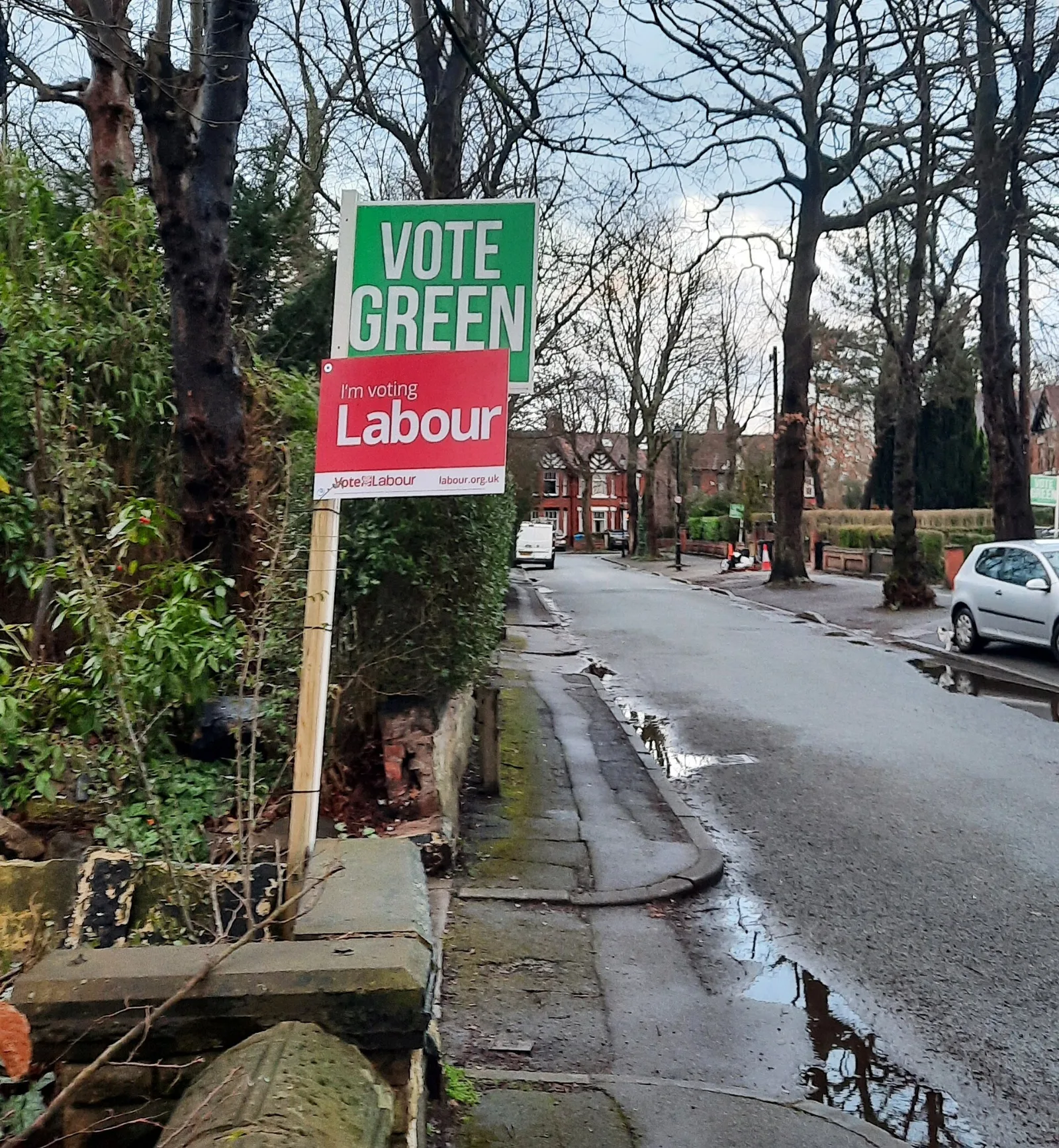
Gorton and Denton by-election
Photo: Original photo by Oldelpaso, CC BY 4.0

The Gorton and Denton by-election in Greater Manchester was held after Andrew Gwynne, elected as the Labour MP in 2024 but sitting as an independent after his suspension from the party, resigned on medical grounds in January 2026. Andy Burnham, the Mayor of Greater Manchester, applied to be Labour’s candidate, but a committee of Labour’s National Executive Committee voted 8–1 not to let him stand.

On 26 February 2026 the Green Party’s Hannah Spencer won with 40.7% of the vote, ahead of Reform UK’s Matt Goodwin on 28.7% and Labour’s Angeliki Stogia on 25.4%. It was the Greens’ first by-election win. Labour had won the seat in 2024 with 50.8% of the vote and a majority of 13,413; the Conservatives and Liberal Democrats each won under 2% in the by-election.

  • Andrew Gwynne resigned as MP on medical grounds on 22 January 2026. He had been suspended from the Labour Party in February 2025 after offensive messages in a WhatsApp group were leaked, and was sitting as an independent.
  • The writ for the by-election was issued on 26 January 2026.
  • On 25 January 2026 a ten-member committee of Labour’s National Executive Committee voted 8–1 to block Andy Burnham from standing. Labour said the decision avoided an unnecessary election for Mayor of Greater Manchester, which Burnham would have had to resign; Burnham said he was disappointed.
  • Hannah Spencer (Green) won 14,980 votes (40.7%), Matt Goodwin (Reform UK) 10,578 (28.7%) and Angeliki Stogia (Labour) 9,364 (25.4%).
  • Charlotte Cadden (Conservative) won 706 votes (1.9%) and Jackie Pearcey (Liberal Democrat) 653 (1.8%). The other six candidates each won 0.4% or less.
  • The result was a Green gain from Labour with a majority of 4,402 (12.0%), on a turnout of 47.5% of an electorate of 77,501. There were 36,814 valid votes and 90 rejected ballots.
  • Eight of the eleven candidates, including the Conservative and Liberal Democrat candidates, won less than the 5% of the vote needed to keep their deposit.
  • At the 2024 general election Labour’s Andrew Gwynne won the seat with 18,555 votes (50.8%) and a majority of 13,413, on a turnout of 47.8%. Reform UK won 14.1%, the Greens 13.2%, the Workers Party of Britain 10.3%, the Conservatives 7.9% and the Liberal Democrats 3.8%.
  • The Workers Party of Britain, fourth in 2024, did not stand a candidate in the by-election.
  • It was the Green Party’s first by-election win, and gave it a fifth MP.
  • In January 2026 the pressure group The Muslim Vote said it would back the Green candidate. Al Jazeera described Gorton as multicultural, with a large Muslim population, students and young professionals, and Denton as majority white.
  • Before the vote the Green leader, Zack Polanski, argued that voting Green was the way to defeat Reform. Afterwards Labour’s deputy leader, Lucy Powell, said the Greens had won the argument that they were best placed to keep Reform out, and the party chair, Anna Turley, called the result “clearly disappointing”, saying by-elections are usually hard for a governing party.
  • The polling expert Sir John Curtice called the result a “seismic moment”, according to Reuters.
  • The New Statesman’s data journalist Ben Walker argued that the result showed the Greens had a “very, very high ceiling”, but said it was unknown whether they could repeat it in a seat with less favourable voters.
  • Nigel Farage claimed, without giving evidence, that the result was a victory for “sectarian voting and cheating”; a Green spokesperson said this was an attempt to undermine a democratic result.
  • The accredited observer group Democracy Volunteers reported “family voting” in 15 of the 22 polling stations it observed. The acting returning officer said no such issues had been reported by polling staff, and Greater Manchester Police later said it had found no evidence of any intent to influence a voter under the Ballot Secrecy Act 2023.
Gorton and Denton by-election, 26 February 2026: vote share
  • Green40.7%
  • Reform UK28.7%
  • Labour25.4%
  • Conservative1.9%
  • Liberal Democrat1.8%

The other six candidates each won 0.4% or less.

Gorton and Denton, 2024 general election: vote share
  • Labour50.8%
  • Reform UK14.1%
  • Green13.2%
  • Workers Party10.3%
  • Conservative7.9%
  • Liberal Democrat3.8%

Why is it politically significant?

The by-election shows how far support has moved away from the two largest parties. A seat Labour won with an absolute majority in 2024 was taken by a minor party, with Reform UK second and the Conservatives losing their deposit. Sir John Curtice described it as a “seismic moment”.

It also shows how first past the post works in a three-way contest: the winner took the seat with about two in five votes, and the result turned on which party voters saw as best placed to win. But it was one by-election, on a turnout under half, in a seat with its own local features, so it is weak evidence on its own about how a general election would go.

How to use

Which arguments does it support?

Minor parties are an increasing challenge to the established parties

Reasoning
Voters who are dissatisfied with the main parties can turn to smaller ones, especially when a governing party is unpopular.
Evidence
The Greens rose from 13.2% in 2024 to 40.7%, Labour fell from 50.8% to third place, and the Conservatives won 1.9%.
How it supports the argument
A minor party won a seat the governing party had held comfortably, and the two largest parties of the 2024 election finished third and fourth.

First past the post can produce winners without majority support

Reasoning
Under first past the post the candidate with the most votes wins, however small their share.
Evidence
Hannah Spencer won with 40.7%, so almost three in five voters backed someone else.
How it supports the argument
In a three-way split the seat was won on a minority of the vote, as is common when support is shared between several parties.

First past the post encourages tactical voting

Reasoning
Voters who fear a ‘wasted vote’ may back whichever candidate seems most likely to beat the one they most oppose.
Evidence
The Greens campaigned as the way to defeat Reform, and Lucy Powell said afterwards that they had won the argument that they were best placed to keep Reform out.
How it supports the argument
The contest was framed around who could stop Reform, rather than only around each party’s own policies.

Which counterarguments exist?

Limits of the evidence

One by-election is a weak guide

By-elections often go against the governing party, as Labour’s chair Anna Turley argued, and turnout was 47.5%. A single result may reflect mid-term protest rather than lasting change in party support.

Other explanations

Local factors may explain much of the result

The seat had particular features: a large Muslim and student population in Gorton, an endorsement of the Greens by The Muslim Vote, no Workers Party candidate after it won 10.3% in 2024, and Labour’s decision not to let Andy Burnham stand. The New Statesman’s Ben Walker noted that the Greens may find seats with less favourable voters harder to win.

A different conclusion

First past the post did not lock out a smaller party

Supporters of first past the post can argue that the result shows the system lets a new party win where its support is concentrated, while still giving the constituency a single, clearly identified MP.

Alternative view

Reform UK disputed the fairness of the result

Nigel Farage claimed the result reflected sectarian voting and cheating, and an observer group reported family voting. However, polling staff reported no such issues and the police found no evidence of an offence, so the result stands.

Concepts and connections

Sources and verification

Event26 February 2026
Added to bank8 November 2026
Last checked8 November 2026
Next check due8 May 2027
  1. 1
    Publisher UK Parliament (MPs and Lords)Published 26 February 2026Type Official statisticsChecked 4 November 2026
    Opened
  2. 2
    Publisher UK Parliament (Election results)Published 2026-02-26Type DataChecked not yet opened
    Source to check
  3. 3
    Publisher UK Parliament (MPs and Lords)Published 2024-07-04Type DataChecked not yet opened
    Source to check
  4. 9
    Publisher Manchester City CouncilPublished 2026-02-27Type OfficialChecked not yet opened
    Source to check
  5. 4
    Publisher Institute for GovernmentPublished 2026-11-08Type ReportChecked not yet opened
    Source to check
  6. 5
    Publisher LabourListPublished 2026-01-22Type NewsChecked not yet opened
    Source to check
  7. 6
    Publisher LabourListPublished 2026-01-25Type NewsChecked not yet opened
    Source to check
  8. 7
    Publisher Express & Star (PA)Published 2026-01-25Type NewsChecked not yet opened
    Source to check
  9. 8
    Publisher New StatesmanPublished 2026-02-27Type NewsChecked not yet opened
    Source to check
  10. 15
    Publisher New StatesmanPublished 2026-02-27Type NewsChecked not yet opened
    Source to check
  11. 10
    Publisher Al JazeeraPublished 2026-02-27Type NewsChecked not yet opened
    Source to check
  12. 12
    Publisher Al JazeeraPublished 2026-02-16Type NewsChecked not yet opened
    Source to check
  13. 11
    Publisher PoliticsHomePublished 2026-01-26Type NewsChecked not yet opened
    Source to check
  14. 13
    Publisher PoliticsHomePublished 2026-02-27Type NewsChecked not yet opened
    Source to check
  15. 14
    Publisher Shropshire StarPublished 2026-02-27Type NewsChecked not yet opened
    Source to check
  16. 16
    Publisher Full FactPublished 2026-02-27Type NewsChecked not yet opened
    Source to check
  17. 17
    Publisher Local Government LawyerPublished 2026-04-01Type NewsChecked not yet opened
    Source to check

About this example

Is it still current?

Current

The facts and their significance still stand.

Why it is in the bank

A clear recent case of a minor party taking a seat from the governing party, and of first past the post in a three-way contest.

  • ✓Relevance to the specification
  • PartlyStrength and reliability of the evidenceThe BBC and Guardian reports could not be opened in this run, so reactions and local context come from other news outlets; estimates of the seat’s Muslim population differ between sources and are left out.
  • ✓Importance to a wider political debate
  • ✓Usefulness in evaluative essays
  • ✓Connections to other topics
  • ✓Sufficiently current
  • ✓Adds something new to the bank

Editorial status

Approved

Signed off for students.

Origin: Human-written · Reviewer: Editor

Every fact on this page has been checked against original sources.