Crossbench
ApprovedDevelopingInternational
Title

Trump’s push to acquire Greenland, the tariff threat against European allies and the Arctic security agreement

Date
January 2026 (crisis); 22 September 2026 (agreement signed)
Relevant topic(s)
The state and globalisationThe state: nation-state and national sovereigntyPower and developmentsDifferent types of powerPower and developmentsDiffering significance of states in global affairsPower and developmentsHow far changing state relationships address contemporary issuesRegionalism and the EUSignificance of the EU as an international body and global actorGlobal governance: politicalPolitical: the United Nations and NATO

What happened?

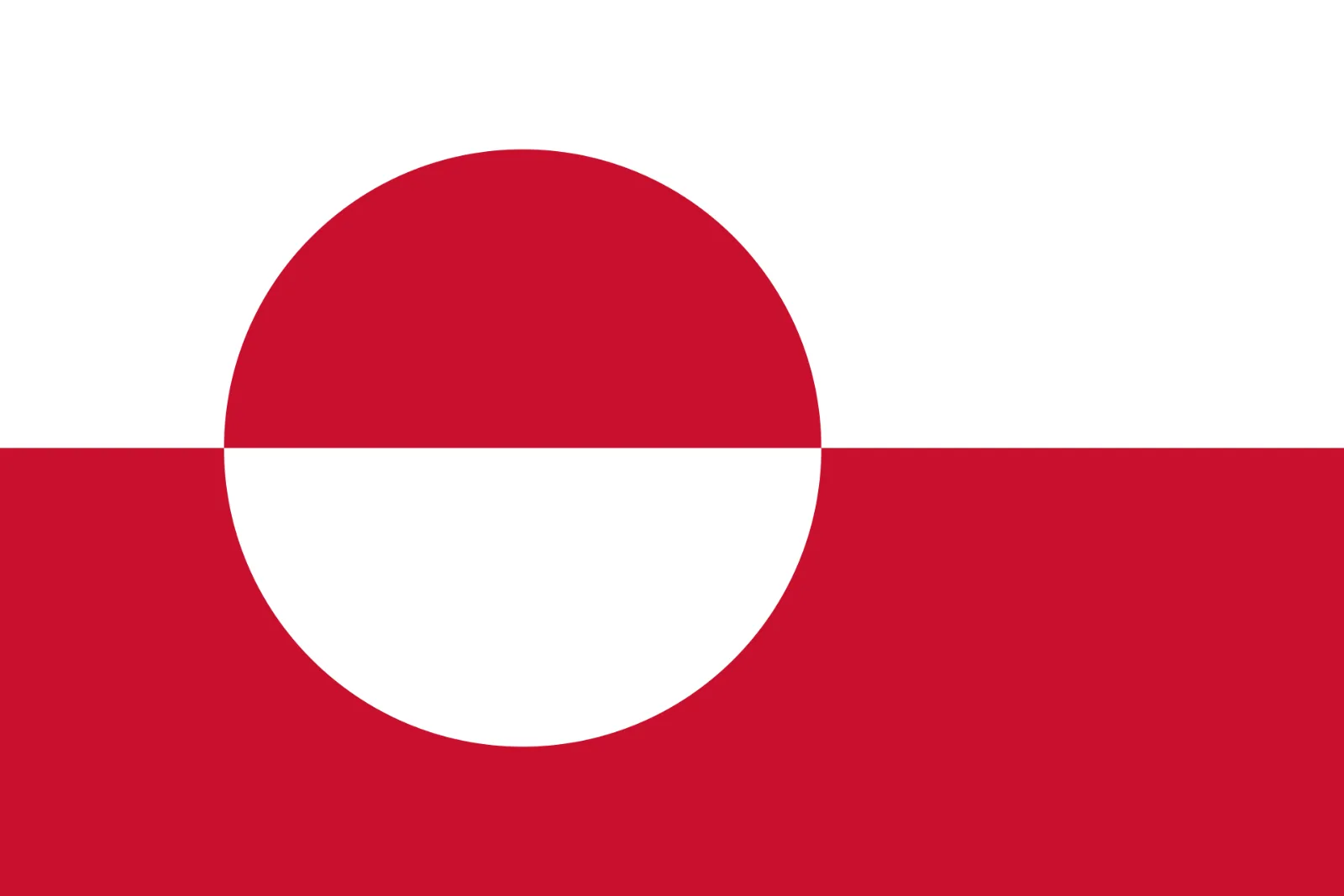
Greenland flag
Photo: Original photo by Jeffrey Connell (IceKarma), Public Domain Mark 1.0

Greenland is a self-governing territory of Denmark, a NATO member. In January 2026 President Trump renewed his call for the United States to acquire it, saying it was needed for US national security and to stop Russia and China gaining a foothold in the Arctic. The White House said military force was an option. Denmark and Greenland’s government rejected any change of sovereignty, and on 17 January Trump announced tariffs on goods from eight European countries that had backed Denmark, to rise unless a deal was reached for the US to buy Greenland.

The European Union warned that it would respond to coercion. On 21 January, after meeting NATO’s Secretary General Mark Rutte in Davos, Trump dropped the tariff threat, said he would not use force and announced a ‘framework’ for a future deal on Arctic security. NATO launched an Arctic mission in February, and on 22 September 2026 the United States, Denmark and Greenland signed a security agreement giving the US new bases while leaving Greenland under Danish sovereignty. Greenland’s parliament approved it on 3 November.

  • On 6 January 2026 the White House press secretary said acquiring Greenland was a national security priority and that using the US military was ‘always an option’. On the same day the leaders of France, Germany, Italy, Poland, Spain, the UK and Denmark issued a statement that Greenland ‘belongs to its people’.
  • Denmark’s Prime Minister Mette Frederiksen warned that if the US attacked another NATO country, ‘everything stops’, including NATO.
  • On 14 January 2026 the Danish and Greenlandic foreign ministers met Vice President JD Vance and Secretary of State Marco Rubio at the White House. They agreed to set up a working group, but Denmark’s foreign minister said a ‘fundamental disagreement’ remained.
  • On 17 January 2026 Trump announced a 10% tariff on goods from Denmark, Norway, Sweden, France, Germany, the UK, the Netherlands and Finland from February, rising to 25% on 1 June unless a deal was reached for the US purchase of Greenland. He linked the tariffs to the recent deployment of small numbers of European troops to Greenland for a Danish-led exercise.
  • Six of the eight countries threatened with tariffs are EU member states. The European Commission said the EU had prepared trade countermeasures and non-tariff instruments in case the tariffs were applied, and France’s President Macron said the EU could use its anti-coercion instrument against the US for the first time.
  • On 21 January 2026, after meeting Mark Rutte in Davos, Trump dropped the tariff threat, said ‘I won’t use force’, and announced a ‘framework’ for a future deal on Greenland and the Arctic. A NATO spokesperson said Rutte had not proposed any compromise on sovereignty.
  • Rutte said the framework would require NATO allies to increase their Arctic security commitments, with NATO commanders working out the extra requirements, and that separate talks would continue between the US, Denmark and Greenland.
  • Greenland’s Prime Minister Jens-Frederik Nielsen said on 22 January that only Greenland and Denmark could make agreements about Greenland, and that ‘sovereignty is a red line’.
  • After an informal meeting on 22 January 2026, EU leaders said Denmark and Greenland had the EU’s full support, that only they could decide matters concerning them, that further US tariffs would be incompatible with the EU–US trade deal, and that the EU would defend itself against any form of coercion.
  • NATO launched Arctic Sentry, an ‘enhanced vigilance activity’ led by its Joint Force Command in Norfolk, Virginia, in February 2026 to bring allies’ activities in the Arctic and High North into one operational approach.
  • When the agreement was announced in September 2026, Denmark and Greenland said it would not compromise Greenland’s sovereignty; Frederiksen called it ‘great for NATO and Europe’.
  • Trump, Frederiksen and Nielsen signed a US–Denmark–Greenland security agreement at the UN headquarters in New York on 22 September 2026.
  • The agreement adds to a 1951 US–Danish defence agreement. It allows the US to expand Pituffik Space Base and open new bases at Narsarsuaq and Mestersvig, bars non-NATO countries from a lasting military presence, keeps investors from outside NATO and the EU out of sensitive sectors, has no end date, and says it respects Greenland’s right to self-determination. It does not cover mining or resources.
  • Greenland’s parliament approved the agreement on 3 November 2026 by 16 votes to none, with seven abstentions. The Danish parliament was due to vote on 19 November.
From tariff threat to security agreement
  1. 6 January 2026White House says military force is an option; seven European leaders say Greenland ‘belongs to its people’.
  2. 14 January 2026Danish and Greenlandic foreign ministers meet the US Vice President and Secretary of State; a working group is agreed.
  3. 17 January 2026Trump announces 10% tariffs on eight European countries from February, rising to 25% on 1 June.
  4. 21 January 2026After meeting NATO’s Secretary General, Trump drops the tariff threat, rules out force and announces a ‘framework’.
  5. 22 January 2026EU leaders give Denmark and Greenland their full support and warn against coercion.
  6. February 2026NATO launches its Arctic Sentry mission.
  7. 22 September 2026US, Denmark and Greenland sign a security agreement in New York.
  8. 3 November 2026Greenland’s parliament approves the agreement (16–0, seven abstentions); a Danish vote is scheduled for 19 November.

Why is it politically significant?

The crisis shows a powerful state using economic coercion, tariffs, against its own allies to pursue a territorial aim, and smaller states and a self-governing territory using international law, sovereignty and self-determination in response. The outcome was a negotiated security agreement rather than a transfer of territory: the US gained new military rights, while Denmark kept sovereignty and Greenland’s right to self-determination was written into the text.

It also tested the EU and NATO. The EU acted as a single trading bloc, preparing countermeasures and backing Denmark, while NATO served as the forum in which the dispute was eased and an Arctic mission was launched. Whether this shows the strength of these institutions or their dependence on the US is open to debate.

How to use

Which arguments does it support?

Economic power can be used as a tool of coercion in international relations

Reasoning
Large economies can threaten access to their markets to change other states’ policies.
Evidence
Trump announced tariffs on eight European countries, rising from 10% to 25% unless a deal was reached on Greenland, and dropped them only once a ‘framework’ was announced.
How it supports the argument
Trade was used as leverage over a question of territory and security between allies.

State sovereignty and self-determination remain central to international politics

Reasoning
Small states and territories rely on international law and the principle that territory cannot be taken without consent.
Evidence
Denmark and Greenland’s leaders called sovereignty a ‘red line’, and the final agreement left Greenland under Danish sovereignty and recognised its right to self-determination.
How it supports the argument
Even under pressure from the strongest state, the legal status of the territory did not change.

The EU can act as a significant global actor

Reasoning
The EU’s combined trade power gives its members leverage that they would lack alone.
Evidence
EU leaders backed Denmark collectively, prepared countermeasures and said they would defend themselves against coercion.
How it supports the argument
The EU responded as a single trading bloc on behalf of the six member states that were threatened.

NATO can help manage disputes between its members

Reasoning
Liberals argue that institutions give states a forum to bargain and reduce conflict.
Evidence
The tariff threat was dropped after Trump met NATO’s Secretary General, and NATO then launched Arctic Sentry.
How it supports the argument
NATO turned a dispute over territory into a shared effort on Arctic security.

Which counterarguments exist?

Alternative view

The US says it acted for legitimate security reasons

The Trump administration argued that Greenland is vital to US national security, to its planned ‘Golden Dome’ missile defence and to keeping Russia and China out of the Arctic. The White House presented the final agreement as giving the US lasting control over security in Greenland at no cost to American taxpayers.

A different conclusion

The episode can be read as showing US dominance rather than allied unity

Realists might argue that the US got much of what it wanted, more bases and a say over which other countries can operate in Greenland, and that NATO and the EU eased the crisis by meeting US demands. A Copenhagen academic quoted by Al Jazeera doubted that the January ‘framework’ was more than a face-saving deal.

Limits of the evidence

The coercion was threatened, not tested

The tariffs were dropped before they took effect, so the episode does not show whether the EU’s countermeasures or anti-coercion instrument would have worked. The agreement had also not yet come into force at the time of writing.

Other explanations

Greenlandic opinion on the deal is divided

Greenland’s foreign minister called ratification an important step, but the pro-independence party Naleraq said the agreement brought no economic benefit and that Greenland wants a better deal once it is independent. Seven members abstained in the vote.

Concepts and connections

Concepts it illustrates

Related examples

None linked yet.

Sources and verification

EventJanuary 2026 (crisis); 22 September 2026 (agreement signed)
Added to bank8 November 2026
Last checked8 November 2026
Next check due8 May 2027
  1. 1
    Publisher Associated Press (via Anchorage Daily News)Published 2026-01-06Type NewsChecked not yet opened
    Source to check
  2. 2
    Publisher Associated Press (via Fortune)Published 2026-01-14Type NewsChecked not yet opened
    Source to check
  3. 3
    Publisher Associated Press (via ABC7 News)Published 2026-01-17Type NewsChecked not yet opened
    Source to check
  4. 9
    Publisher Associated Press (via WCAX)Published 2026-01-20Type NewsChecked not yet opened
    Source to check
  5. 4
    Publisher Al JazeeraPublished 2026-01-21Type NewsChecked not yet opened
    Source to check
  6. 11
    Publisher Reuters (via The Star)Published 2026-01-22Type NewsChecked not yet opened
    Source to check
  7. 12
    Publisher Arctic TodayPublished 2026-01-22Type NewsChecked not yet opened
    Source to check
  8. 5
    Publisher European Council (published by the European External Action Service)Published 2026-01-26Type OfficialChecked not yet opened
    Source to check
  9. 10Source to check
  10. 13
    Publisher Reuters (via CP24)Published 2026-02-11Type NewsChecked not yet opened
    Source to check
  11. 6
    Publisher NATOPublished 2026-07-24Type OfficialChecked not yet opened
    Source to check
  12. 14
    Publisher Al JazeeraPublished 2026-09-19Type NewsChecked not yet opened
    Source to check
  13. 7
    Publisher The White HousePublished 2026-09-22Type OfficialChecked not yet opened
    Source to check
  14. 16
    Publisher Al JazeeraPublished 2026-09-22Type NewsChecked not yet opened
    Source to check
  15. 15
    Publisher Reuters (via The Star)Published 2026-09-23Type NewsChecked not yet opened
    Source to check
  16. 8
    Publisher Reuters (via Business Day)Published 2026-11-03Type NewsChecked not yet opened
    Source to check
  17. 17
    Publisher Associated Press (via ABC News)Published 2026-11-03Type NewsChecked not yet opened
    Source to check

About this example

Is it still current?

Developing

Greenland’s parliament approved the agreement on 3 November 2026. It takes effect only after the Danish parliament also approves it; a vote there was scheduled for 19 November 2026.

Why it is in the bank

A recent case of economic coercion between allies that links sovereignty, the EU as a global actor and NATO cohesion in one episode.

  • ✓Relevance to the specification
  • PartlyStrength and reliability of the evidenceMost details come from news agencies. The tariff announcement was a social media post; the European Commission statement was read in a reproduced copy because the Commission site could not be opened; the full agreement text and the Greenland parliament’s own record were not opened.
  • ✓Importance to a wider political debate
  • ✓Usefulness in evaluative essays
  • ✓Connections to other topics
  • ✓Sufficiently current
  • ✓Adds something new to the bank

Editorial status

Approved

Signed off for students.

Origin: Human-written · Reviewer: Editor

Every fact on this page has been checked against original sources.