Crossbench
ApprovedConcludedElection
Title

Labour holds Holborn and St Pancras as the Green leader comes second

Date
8 October 2026 (result declared overnight into 9 October)
Relevant topic(s)
Political partiesEmerging and minor UK political partiesPolitical partiesEstablished political partiesElectoral systemsElectoral system analysisElectoral systemsDifferent electoral systemsDemocracy and participationDirect and representative democracy

What happened?

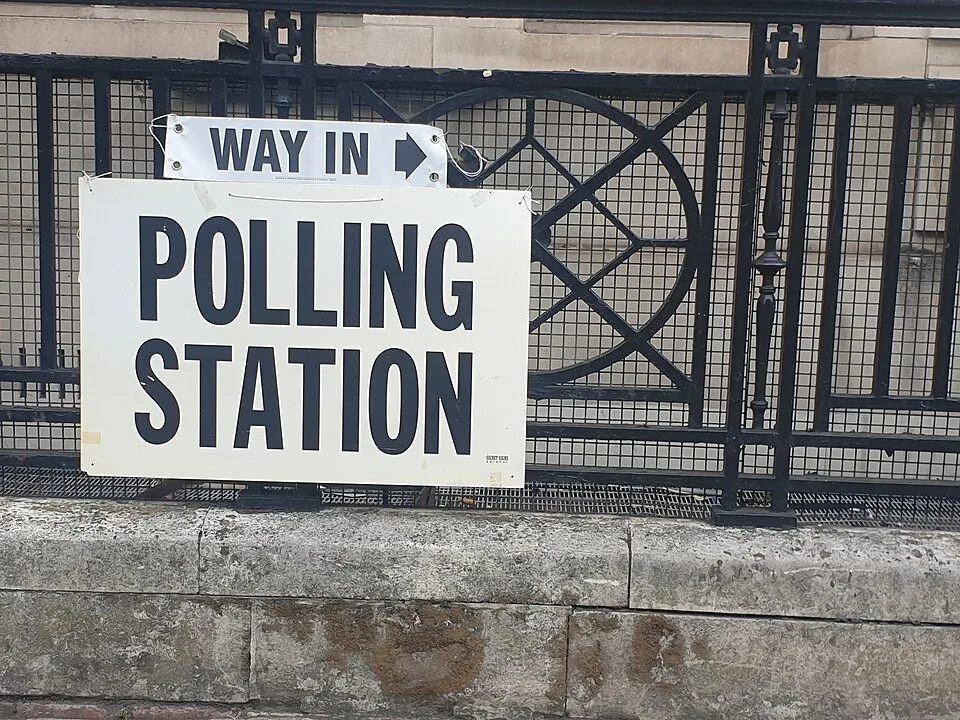
Polling station sign, Camden Town Library
Photo: Original photo by Bondegezou, CC BY 4.0

Keir Starmer resigned as MP for Holborn and St Pancras in September 2026, after stepping down as Prime Minister, which caused a by-election in the central London seat. Labour has held the seat since it was created in 1983. Fifteen candidates stood, including the Green Party leader, Zack Polanski, and Labour’s Sagal Abdi-Wali, the leader of Camden Council.

At the poll on 8 October 2026 Labour held the seat with 45.2% of the vote. Polanski came second with 32.8%, the Conservatives third and Reform UK fourth. Labour’s majority fell from 11,572 at the 2024 general election to 3,364, and turnout fell from 54.1% to 38.6%.
  • The by-election was held on 8 October 2026; the writ was issued on 7 September 2026.
  • Sagal Abdi-Wali (Labour) won with 12,292 votes (45.2%). Zack Polanski (Green) was second with 8,928 votes (32.8%), giving a majority of 3,364 (12.4 percentage points).
  • Ewan Cameron (Conservative) was third with 1,922 votes (7.1%), Peter Newman (Reform UK) fourth with 1,612 (5.9%), Patrick Stillman (Liberal Democrat) fifth with 924 (3.4%) and Tyler Kurtis Johnson (Restore Britain) sixth with 692 (2.5%).
  • The other nine candidates each won less than 1.5% of the vote; George Galloway (Workers Party of Britain) received 314 votes (1.2%).
  • Turnout was 38.6%, with 27,211 valid votes from an electorate of 70,449.
  • At the 2024 general election Keir Starmer won the seat with 18,884 votes (48.9%) and a majority of 11,572 on a turnout of 54.1%. An independent, Andrew Feinstein, was second with 18.9% and the Green Party third with 10.4%.
  • Compared with 2024, Labour’s share of the vote fell by 3.7 points and the Green share rose by 22.4 points.
  • Keir Starmer resigned the seat in September 2026 after stepping down as Prime Minister.
  • Earlier in 2026, at the Gorton and Denton by-election on 26 February, the Green Party gained a seat from Labour, with Labour third behind Reform UK.
  • After the result Polanski said he would continue as Green leader, and a Green spokesperson described hopes of a return to two-party politics as “wishful thinking”.
  • Sky News’s analysis described Labour’s fall in vote share as smaller than average and suggested Labour might be winning back voters it had lost to the Greens.
  • David Jeffery, a lecturer in British politics, argued in UnHerd that the result ended the Greens’ momentum; Russell Warfield argued in openDemocracy that it should not be read as a Green defeat.
  • The week of the poll, Green Party members backed a conference motion on Zionism that four of the party’s five MPs opposed, and Polanski faced questions about it during the campaign.
Holborn and St Pancras by-election, 8 October 2026: share of the vote
  • Labour45.2%
  • Green32.8%
  • Conservative7.1%
  • Reform UK5.9%
  • Liberal Democrat3.4%
  • Restore Britain2.5%

Nine other candidates each won less than 1.5%. Turnout was 38.6%.

Why is it politically significant?

By-elections are often read as a test of a government, and this was the first in a seat held by a former Prime Minister after a change of leader. Labour held a seat it has won since 1983, but with a much smaller majority, so commentators drew different conclusions: some saw a recovery for Labour, others a continuing challenge from the Greens.

The result is also evidence about minor parties and first-past-the-post. A party leader standing for a minor party took nearly a third of the vote and second place, while the winner was elected with less than half of the votes cast on a turnout well below that of 2024. As a single by-election, it shows what can happen in one seat rather than a national trend.

How to use

Which arguments does it support?

Emerging and minor parties are a growing challenge to the two main parties

Reasoning
Minor parties have traditionally struggled to come close to winning seats under first-past-the-post.
Evidence
The Green share rose from 10.4% in 2024 to 32.8%, finishing second ahead of the Conservatives and Reform UK, months after the Greens gained Gorton and Denton from Labour.
How it supports the argument
The Greens became the main challenger in a seat Labour has held since 1983.

First-past-the-post allows candidates to win without majority support

Reasoning
Under first-past-the-post the candidate with the most votes wins, however small their share.
Evidence
Abdi-Wali won with 45.2% of votes cast: 12,292 votes from an electorate of 70,449.
How it supports the argument
More than half of those who voted backed other candidates, and fewer than one in five registered electors voted for the winner.

Turnout at by-elections raises concerns about participation

Reasoning
Low turnout can weaken the legitimacy of the person elected.
Evidence
Turnout fell from 54.1% at the 2024 general election to 38.6%.
How it supports the argument
Most registered electors did not vote in choosing their MP.

Which counterarguments exist?

Alternative view

The result may show the limits of the Green advance

David Jeffery, a lecturer in British politics writing in UnHerd, argued that the result ended the Greens’ momentum, noting that their share was only a few points above the combined 2024 vote for the Greens and the independent Andrew Feinstein. Russell Warfield, writing in openDemocracy, argued the opposite: that the result should not be read as a Green defeat and that Labour should not assume the challenge from its left was over.

A different conclusion

It can be read as a good result for the government

Sky News’s analysis described Labour’s fall in vote share as smaller than average for a governing party at a by-election, suggesting Labour under its new leader might be winning back voters. Polanski himself said many voters wanted to give the new Prime Minister a chance.

Limits of the evidence

One by-election is weak evidence of a national trend

By-elections have lower turnout and more local and personal factors than general elections. Here a party leader was standing, the seat had been held by a former Prime Minister, and in 2024 a strong independent candidate had taken second place, so comparisons with 2024 need care.

Other explanations

Campaign events may explain part of the result

ITV News reported that Polanski faced pressure during the campaign after Green members backed a conference motion on Zionism that most of the party’s MPs opposed, so the result may reflect events in the campaign as well as long-term support for the parties.

Concepts and connections

Sources and verification

Event8 October 2026 (result declared overnight into 9 October)
Added to bank8 November 2026
Last checked8 November 2026
Next check due8 May 2027
  1. 1
    Publisher UK Parliament (electionresults.parliament.uk)Published 2026-10-08Type DataChecked not yet opened
    Source to check
  2. 2
    Publisher UK Parliament (MPs and Lords)Published 2024-07-04Type DataChecked not yet opened
    Source to check
  3. 4
    Publisher UK Parliament (electionresults.parliament.uk)Published 2026-02-26Type DataChecked not yet opened
    Source to check
  4. 3
    Publisher ITV NewsPublished 2026-10-09Type NewsChecked not yet opened
    Source to check
  5. 5
    Publisher ITV NewsPublished 2026-10-09Type NewsChecked not yet opened
    Source to check
  6. 6
    Publisher Sky News (as republished by Radio X)Published 2026-10-09Type NewsChecked not yet opened
    Source to check
  7. 7
    Publisher UnHerdPublished 2026-10-09Type NewsChecked not yet opened
    Source to check
  8. 8
    Publisher openDemocracyPublished 2026-10-09Type NewsChecked not yet opened
    Source to check

About this example

Is it still current?

Concluded

The development has ended or been reversed, but remains useful evidence.

Why it is in the bank

A recent by-election in which a minor party leader came second in a long-held Labour seat, useful for party competition, first-past-the-post and turnout.

  • ✓Relevance to the specification
  • PartlyStrength and reliability of the evidenceCamden Council’s declaration and the UK Parliament members-site page for this by-election could not be opened; the result comes from UK Parliament’s election results site. Interpretation comes from news and comment, and the Sky News analysis was read in a version republished by Radio X.
  • ✓Importance to a wider political debate
  • ✓Usefulness in evaluative essays
  • ✓Connections to other topics
  • ✓Sufficiently current
  • ✓Adds something new to the bank

Editorial status

Approved

Signed off for students.

Origin: Human-written · Reviewer: Editor

Every fact on this page has been checked against original sources.