Crossbench
ApprovedCurrentElection
Title

Reform UK and the Greens make large gains in the 2026 English local elections

Date
7 May 2026 (polling day)
Relevant topic(s)
Political partiesEmerging and minor UK political partiesPolitical partiesUK political parties in contextPolitical partiesEstablished political partiesDemocracy and participationDirect and representative democracy

What happened?

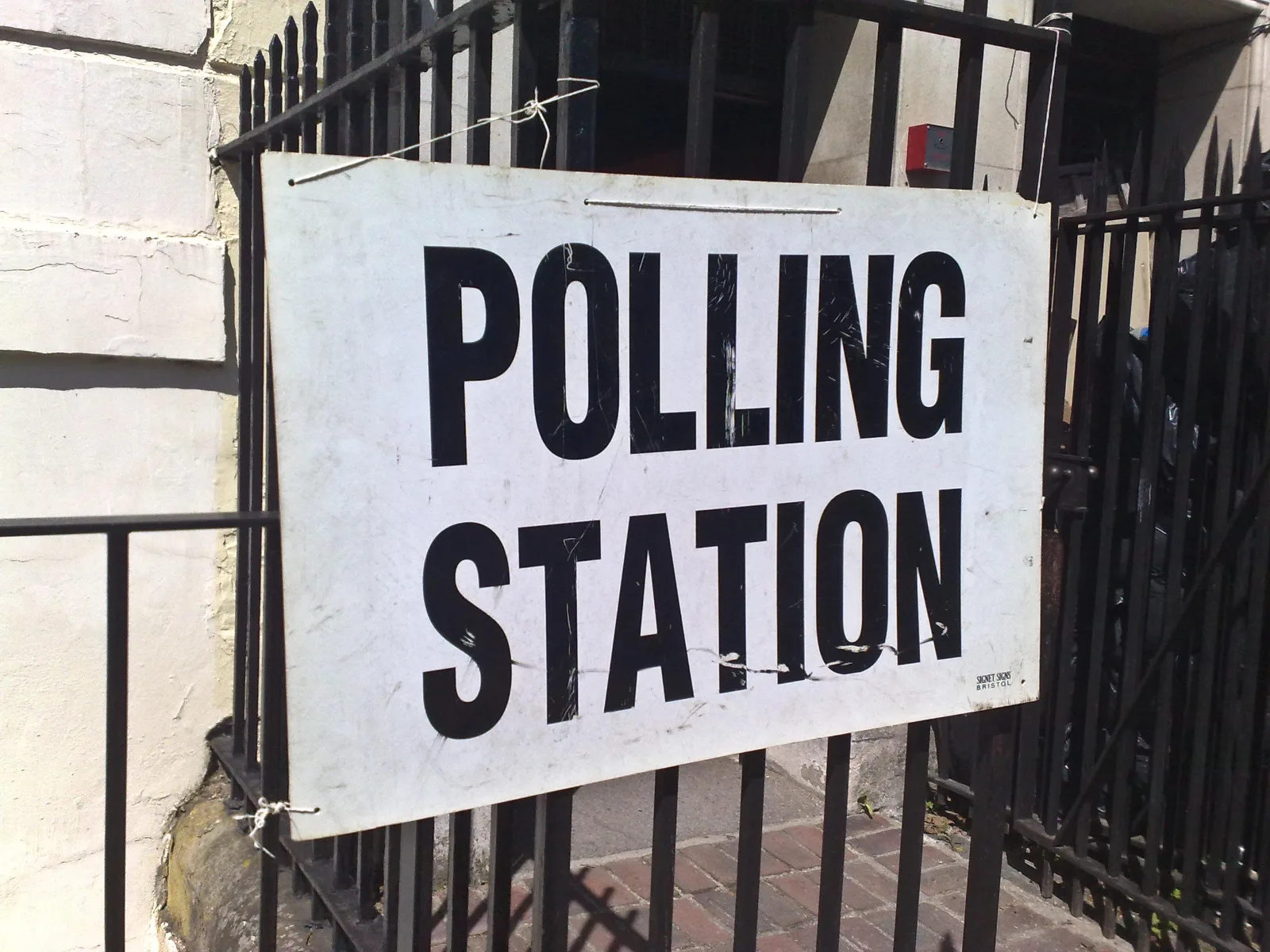
Ballot station
Photo: Original photo by secretlondon123, CC BY 2.0

On 7 May 2026 elections were held for 136 English councils, including every London borough, and for six directly elected mayors. Earlier in the year the government had planned to postpone 30 of these council elections during a reorganisation of local government, but it dropped the plan in February after a legal challenge from Reform UK.

Reform UK, which had controlled none of the councils voting, was reported to have won about 1,450 extra councillors and control of 14 councils, including Sunderland, Barnsley, Essex and Suffolk. Labour and the Conservatives lost large numbers of seats, the Greens won their first directly elected mayors in Hackney and Lewisham, and many more councils ended with no party in overall control.

  • Scheduled elections were held for 136 authorities and six directly elected mayors on 7 May 2026, with more than 25,000 candidates standing.
  • Turnout was 41.2% in metropolitan, London borough, unitary and district elections, up from 33.6% in 2022, and 45.2% in county council elections, the highest for a local or county election not combined with a general election or referendum in 30 years.
  • In January 2026 the government announced plans to postpone elections for 30 councils, including five already postponed from May 2025; the decision was reversed in February 2026.
  • The reversal was announced on 16 February 2026 by the Local Government Secretary, Steve Reed, citing “recent legal advice”, after Reform UK brought a judicial review; the government said it would pay Reform’s legal costs. Of 63 councils offered a postponement, 29 had asked for one.
  • Reform UK gained 1,451 councillors, giving it 1,453; Labour lost 1,496, the Conservatives lost 563, the Liberal Democrats gained 155 and the Greens gained 441. Government Business gave slightly different figures (Reform up 1,452 to 1,454; Labour down 1,498).
  • Reform UK won control of 14 councils, having held none; Labour lost control of 38 councils, the Conservatives six, and the Liberal Democrats gained one. The Greens were reported to have gained five councils.
  • The number of councils in no overall control rose to 64 (up 23) according to LocalGov, or 61 (up 22) according to The MJ. Labour still controlled more councils than any other party.
  • The Greens won the Hackney and Lewisham mayoralties, their first directly elected mayors. Labour held Newham, the Conservatives held Croydon, Aspire held Tower Hamlets and the Liberal Democrats held Watford.
  • The BBC’s projected national share, an estimate of the Great Britain vote if local elections had been held everywhere, put Reform UK on 26%, the Greens on 18%, the Conservatives and Labour on 17% each and the Liberal Democrats on 16%. Labour’s 17% was its lowest in the series.
  • The Electoral Reform Society calculated that Reform UK won 63% of seats in Calderdale with 31% of the vote, and the Greens 74% of seats in Lewisham with 42% of the vote.
  • Nigel Farage called the results a “truly historic shift in British politics”; the Green leader Zack Polanski said two-party politics was “dead and it is buried”; Kemi Badenoch said “Conservatives are coming back”; and Keir Starmer took responsibility for “tough” results but said he would stay as Prime Minister.
Net change in councillors, English local elections, May 2026
  • Reform UK+1,451
  • Green+441
  • Liberal Democrat+155
  • Conservative−563
  • Labour−1,496

Reported figures; Government Business gives Reform UK +1,452 and Labour −1,498.

Why is it politically significant?

The results are evidence for the debate about the UK’s party system. Five parties were within ten points of each other on the BBC’s projected national share, Reform UK went from controlling none of these councils to 14, and the Greens won mayoralties and councils in London that Labour had held. Many more councils now have no single party in control.

They also bear on debates about participation. Turnout rose sharply on the last comparable elections, yet most eligible voters still did not vote, and the government’s plan to postpone some elections, dropped after a legal challenge, raised questions about who decides when voters get a say.

How to use

Which arguments does it support?

The UK is moving from a two-party to a multi-party system

Reasoning
Labour and the Conservatives together no longer dominate the vote, and several smaller parties now win and run councils.
Evidence
On the BBC’s projection Reform UK led on 26%, with the Greens, Conservatives, Labour and Liberal Democrats between 16% and 18%. The Green leader said two-party politics was “dead”, and the head of the think tank Localis described a “European style, multi-party political system”.
How it supports the argument
No party came close to a majority of the vote, and support was spread across five parties.

Emerging parties can break through and take on the established parties

Reasoning
Parties that win and run councils gain local organisation, experience and credibility.
Evidence
Reform UK won 14 councils, including Labour-held Sunderland and Barnsley and Conservative-held Essex and Suffolk; the Greens won their first directly elected mayors.
How it supports the argument
Before the elections Sir John Curtice argued that Reform and the Greens were standing in over 90% of English local contests, more than a typical protest surge.

Claims of a participation crisis can be overstated

Reasoning
Turnout responds to how competitive and important voters think an election is.
Evidence
Turnout in metropolitan, London borough, unitary and district elections rose to 41.2%, from 33.6% in 2022, and county turnout was the highest in 30 years for a stand-alone local election.
How it supports the argument
More people voted in a contest seen as unusually open, which suggests disengagement is not fixed.

Which counterarguments exist?

Limits of the evidence

Local elections are not general elections

The projected national share is an estimate, and smaller parties often do better locally than in national polls; Labour MP Luke Akehurst argued that national polls putting Labour above 20% were not invalidated by its 17% local figure. The Electoral Reform Society notes the figures do not mean a party would win that share of MPs.

Alternative view

The established parties have not been replaced

Labour still controlled more councils than any other party after the elections, and Kemi Badenoch argued that “Conservatives are coming back”.

Other explanations

First past the post exaggerated the gains

The Electoral Reform Society argues that with support split between many parties, first past the post gave parties large majorities on a minority of votes, such as Reform UK in Calderdale and the Greens in Lewisham, so seat gains overstate the shift in votes.

Limits of the evidence

Most voters still did not vote

Even at 41.2%, turnout in most of the councils voting meant that a majority of eligible voters did not take part, so the results reflect the views of a minority of the electorate.

Concepts and connections

Sources and verification

Event7 May 2026 (polling day)
Added to bank8 November 2026
Last checked8 November 2026
Next check due8 May 2027
  1. 3
    Publisher Electoral CommissionPublished 2026-09-14Type ReportChecked not yet opened
    Source to check
  2. 1
    Publisher LocalGovPublished 2026-05-08Type NewsChecked not yet opened
    Source to check
  3. 2
    Publisher The MJ (Jonathan Werran, Localis)Published 2026-05-12Type NewsChecked not yet opened
    Source to check
  4. 6
    Publisher Government BusinessPublished 2026-05-12Type NewsChecked not yet opened
    Source to check
  5. 4
    Publisher LBCPublished 2026-02-17Type NewsChecked not yet opened
    Source to check
  6. 5
    Publisher New StatesmanPublished 2026-02-16Type NewsChecked not yet opened
    Source to check
  7. 7
    Publisher Electoral Reform SocietyPublished 2026-05-18Type ReportChecked not yet opened
    Source to check
  8. 8
    Publisher LabourList (Luke Akehurst MP)Published 2026-05-11Type NewsChecked not yet opened
    Source to check
  9. 10
    Publisher IpsosPublished 2026-05-01Type ReportChecked not yet opened
    Source to check
  10. 9
    Publisher ITV NewsPublished 8–9 May 2026Type NewsChecked 4 November 2026
    Limitation: Councillor changes were partial results with some councils still to declare.
    Opened

About this example

Is it still current?

Current

The facts and their significance still stand.

Why it is in the bank

The largest test of the parties since the 2024 general election, showing gains for emerging parties, losses for both main parties and higher local turnout.

  • ✓Relevance to the specification
  • PartlyStrength and reliability of the evidenceParty seat and council tallies come from trade press (LocalGov, The MJ, Government Business), which differ by one or two seats and on the no-overall-control count; the BBC results page and a House of Commons Library briefing could not be opened. The projected national share is taken from the Electoral Reform Society and LabourList rather than the BBC directly.
  • ✓Importance to a wider political debate
  • ✓Usefulness in evaluative essays
  • ✓Connections to other topics
  • ✓Sufficiently current
  • ✓Adds something new to the bank

Editorial status

Approved

Signed off for students.

Origin: Human-written · Reviewer: Editor

Every fact on this page has been checked against original sources.