Crossbench
ApprovedDevelopingInternational
Title

US-brokered push for three-way Russia–Ukraine talks and a local ceasefire in Oleshky

Date
21 October to 7 November 2026 (talks due 10–11 November)
Relevant topic(s)
Power and developmentsHow far changing state relationships address contemporary issuesPower and developmentsDiffering significance of states in global affairsPower and developmentsPolarityGlobal governance: politicalPolitical: the United Nations and NATOComparative theoriesHow far realism and liberalism explain developments since 2000

What happened?

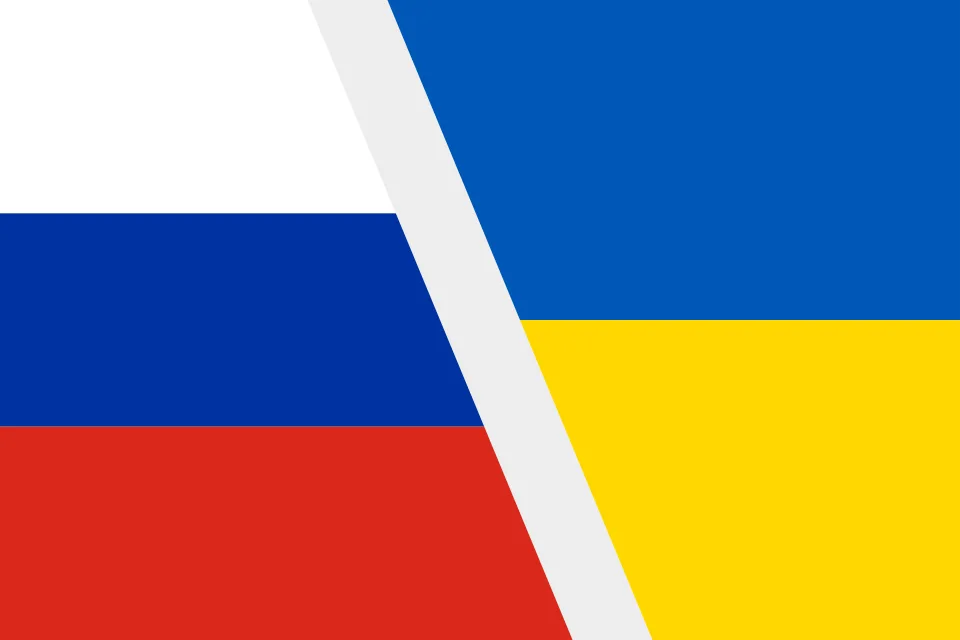
Russia Ukraine
Photo: Original photo by Vectorization: QuickQuokka; War flag: Mhawk10;, Public Domain Mark 1.0

In October 2026 the United States renewed its effort to broker an end to the war between Russia and Ukraine, after US-mediated talks had paused in February. The US envoy Steve Witkoff met President Zelenskyy and European leaders in Oslo on 20 October and President Putin in St Petersburg on 21 October. Both presidents then said they backed new three-way talks between the US, Russia and Ukraine.

Separately, Russia and Ukraine agreed a short local ceasefire in Oleshky, a town in the Kherson region held by Russian forces since 2022, so that aid could be delivered and civilians evacuated. The White House said the agreement was brokered by the First Lady, Melania Trump. On 2 November Witkoff announced talks in Abu Dhabi on 10–11 November. Attacks by both sides continued elsewhere, and the two governments remained far apart on the terms of any settlement.
  • On 20 October 2026 in Oslo, Zelenskyy met the Norwegian Prime Minister and the Finnish President and held a meeting with the US envoys Steve Witkoff and Jared Kushner, according to the Ukrainian presidential office.
  • Witkoff met Putin in St Petersburg on 21 October 2026. The Kremlin aide Yuri Ushakov said Russia was ready “in principle” to resume talks with Washington and Kyiv, and Zelenskyy said Russia supported a three-way meeting at the level of negotiating teams.
  • The last US-mediated peace talks before this push were held in February 2026.
  • The White House announced on 23 October 2026 that Russia and Ukraine had agreed to pause military action in Oleshky so that aid could reach residents and civilians could leave by a safe route. It described Melania Trump as the “Exclusive Intermediary”.
  • Both Russia and Ukraine said Melania Trump played an important role in coordinating the Oleshky agreement.
  • The Oleshky ceasefire took effect on 27 October 2026 and expired at the end of 1 November. Ukraine’s and Russia’s human rights commissioners both said it had been observed.
  • The White House and Melania Trump said nearly 800 people were evacuated during the ceasefire; Reuters noted it was not known how many residents chose to stay.
  • On 2 November 2026 Witkoff announced that the US would host Russian and Ukrainian delegations in Abu Dhabi on 10–11 November to discuss post-war security, de-escalation, humanitarian measures and ending the war.
  • On 7 November the Kremlin spokesperson Dmitry Peskov said Russia would send senior diplomats and military officials to Abu Dhabi. Ukraine’s delegation was to be led by Rustem Umerov.
  • On 2 November 2026 Ukraine’s emergency services said 26 people were killed in Russian bombing of an aid distribution centre and shelter in Komyshuvakha, Zaporizhzhia region; Russia’s Defence Ministry said it shot down 212 Ukrainian drones overnight.
  • Russia demands control of the Donetsk, Luhansk, Zaporizhzhia and Kherson regions, which it has declared annexed, as well as Crimea; Ukraine rejects giving up territory and seeks Western-backed security guarantees.
From Oslo to Abu Dhabi
  1. 20 October 2026Zelenskyy meets Nordic leaders and US envoys in Oslo
  2. 21 October 2026Witkoff meets Putin in St Petersburg; both presidents back three-way talks
  3. 23 October 2026White House announces a local ceasefire in Oleshky
  4. 27 October to 1 November 2026Oleshky ceasefire in force; aid delivered and civilians evacuated
  5. 2 November 2026Witkoff announces talks in Abu Dhabi; Russian bombing in Komyshuvakha reported to kill 26
  6. 10–11 November 2026Three-way talks due in Abu Dhabi

Why is it politically significant?

The example shows the United States acting as the main broker between two warring states, with other actors such as Norway, Finland and the Vatican in supporting roles. It is useful for questions about the significance of states and about whether great-power diplomacy can address a major conflict.

It also shows the limited role of the United Nations in this conflict. The local ceasefire and the new talks were arranged by the US rather than through the UN, which supports arguments about the constraints on global governance when permanent members of the Security Council are directly involved.

How to use

Which arguments does it support?

The United States remains the most significant state in global security

Reasoning
Power includes the ability to bring rivals to the table and set the agenda.
Evidence
After meetings led by a US envoy in Oslo and St Petersburg, both Russia and Ukraine backed three-way talks hosted by the US in Abu Dhabi.
How it supports the argument
The new round followed a US proposal and meetings led by the US envoy, with the US as host.

The UN has a limited role when great powers are involved in a conflict

Reasoning
A permanent member of the Security Council can block Council action, so mediation often happens outside the UN.
Evidence
The Oleshky ceasefire was brokered through the White House, and the three-way talks were arranged by the US.
How it supports the argument
The UN was not the forum for either the ceasefire or the talks.

Realism helps to explain state behaviour in the war

Reasoning
Realists argue that states pursue security and territory and that agreements reflect the balance of power.
Evidence
Russian strikes continued while talks were being arranged, and Russia’s territorial demands were unchanged.
How it supports the argument
Both sides agreed to talk without changing their core positions, consistent with bargaining from strength.

Which counterarguments exist?

Alternative view

The diplomacy has not yet changed the war

AP and Reuters reported that Russia and Ukraine remained far apart on territory and security guarantees, and attacks continued during and after the local ceasefire. On this view a short local truce and a promise of talks show the limits of US influence rather than its strength.

A different conclusion

Cooperation and mediation by many actors

Liberals could point out that the Oleshky agreement depended on humanitarian cooperation between officials of both sides, with the Vatican, Norway and Finland also involved, and that Ukraine’s ombudsman said it could serve as a model. This suggests diplomacy is not simply a matter of US power.

Limits of the evidence

Much rests on statements by the parties

Accounts of who brokered the ceasefire and how many people were evacuated come mainly from the White House and from Russian and Ukrainian officials. The talks had not taken place at the time of writing, so their outcome is unknown.

Other explanations

Europe’s role is contested

A Kremlin aide said European representatives would not be invited to the three-way talks, while US negotiators held separate meetings with France, Germany, the UK, the EU and NATO. Whether this sidelines or includes Europe is open to debate.

Concepts and connections

Concepts it illustrates

No glossary concepts linked yet.

Sources and verification

Event21 October to 7 November 2026 (talks due 10–11 November)
Added to bank8 November 2026
Last checked8 November 2026
Next check due8 May 2027
  1. 1
    Publisher President of Ukraine (Office of the President)Published 2026-10-20Type OfficialChecked not yet opened
    Source to check
  2. 2
    Publisher Al Jazeera (with AFP and Reuters)Published 2026-10-21Type NewsChecked not yet opened
    Source to check
  3. 3
    Publisher The White HousePublished 2026-10-23Type OfficialChecked not yet opened
    Source to check
  4. 9
    Publisher Reuters (via The Jakarta Post)Published 2026-10-24Type NewsChecked not yet opened
    Source to check
  5. 4
    Publisher Associated Press (via News4Jax)Published 2026-10-28Type NewsChecked not yet opened
    Source to check
  6. 5
    Publisher Reuters (via Cyprus Mail)Published 2026-11-02Type NewsChecked not yet opened
    Source to check
  7. 6
    Publisher Reuters (via Al-Monitor)Published 2026-11-02Type NewsChecked not yet opened
    Source to check
  8. 7
    Publisher Associated Press (via The Irish News)Published 2026-11-02Type NewsChecked not yet opened
    Source to check
  9. 10
    Publisher The White HousePublished 2026-11-05Type OfficialChecked not yet opened
    Source to check
  10. 11
    Publisher The Kyiv Independent (via Yahoo News)Published 2026-11-07Type NewsChecked not yet opened
    Source to check
  11. 8
    Publisher Associated Press (via The Boston Globe)Published 24 October 2026Type NewsChecked 4 November 2026
    Opened

About this example

Is it still current?

Developing

Three-way talks in Abu Dhabi were due on 10–11 November 2026 and had not taken place at the last check on 8 November 2026.

Why it is in the bank

A current example of great-power mediation in an interstate war that took place outside the UN, useful alongside Russia’s 2022 Security Council veto.

  • ✓Relevance to the specification
  • PartlyStrength and reliability of the evidenceNews reports are carried by syndicating sites rather than Reuters or AP directly.
  • ✓Importance to a wider political debate
  • ✓Usefulness in evaluative essays
  • ✓Connections to other topics
  • ✓Sufficiently current
  • ✓Adds something new to the bank

Editorial status

Approved

Signed off for students.

Origin: Human-written · Reviewer: Editor

Every fact on this page has been checked against original sources.